
FEFAC
The voice of the European Compound Feed & Premix Industry
Latest news
FAO LEAP call for experts to revise the Guidelines on Environmental Performance of Animal Feeds Supply Chains
FEFAC calls for an EU contingency plan to safeguard essential EU feed supplies

EU Vulnerability
for Access to Essential Nutritional Feed Additives – FEFAC diagnosis and
recommendations for mitigation measures
With the support of its members, FEFAC issued in September 2025 a study on EU vulnerability regarding access to essential nutritional feed additives. On this basis, the European Commission and the EU High Representative for Foreign Affairs and Security Policy underlined in their Joint Communication on Strengthening EU Economic Security in December 2025, the strategic dependency on third countries faced by the EU for the sourcing of feed and feed additives. In March 2026, FEFAC provided its recommendations on measures and tools to mitigate the impact of this dependency.

EU Feed Circularity Catalogue – Existing Legal Restrictions to Enhanced Animal Feed Circularity
FEFAC, together with seven other industry sector federations and stakeholder organisations, launched a joint initiative to raise awareness on the regulatory obstacles currently limiting feed circularity in livestock production. The objective is to promote the development of a supportive legislative environment that encourages greater circularity in feed ingredient sourcing, without compromising safety. A set of proposed measures has been detailed in a joint report, alongside practical examples of regulatory restrictions that deserve re-examination. This initiative could serve as a foundation for an EU Feed Circularity Roadmap and feed into ongoing policy discussions, including the EU Circular Economy Act and upcoming reviews of relevant EU regulations.

Sustainable Animal Feeding Strategies
FEFAC initiated an awareness campaign on the potential benefits of advanced feeding strategies for enhanced and circular sustainable livestock and aquaculture production. The objective is to facilitate access to chain partners and decision-makers to sound scientific-based information on the techniques themselves, how they work and for which species, but also some considerations on the economic impacts and trade-offs. Practical case studies showcasing existing animal feeding strategies are now available online on the FEFAC website.

FEFAC Feed Sustainability Charter 2030
In September 2020 FEFAC launched its Feed Sustainability Charter 2030, setting out the five ambitions that contribute to more sustainable feed production. In October 2025 FEFAC released its 5th Feed Sustainability Charter Progress Report.

Events
From Food Waste to Circular & Sustainable Animal Food Products
Read more >IFIF FAO Annual Meeting 2026
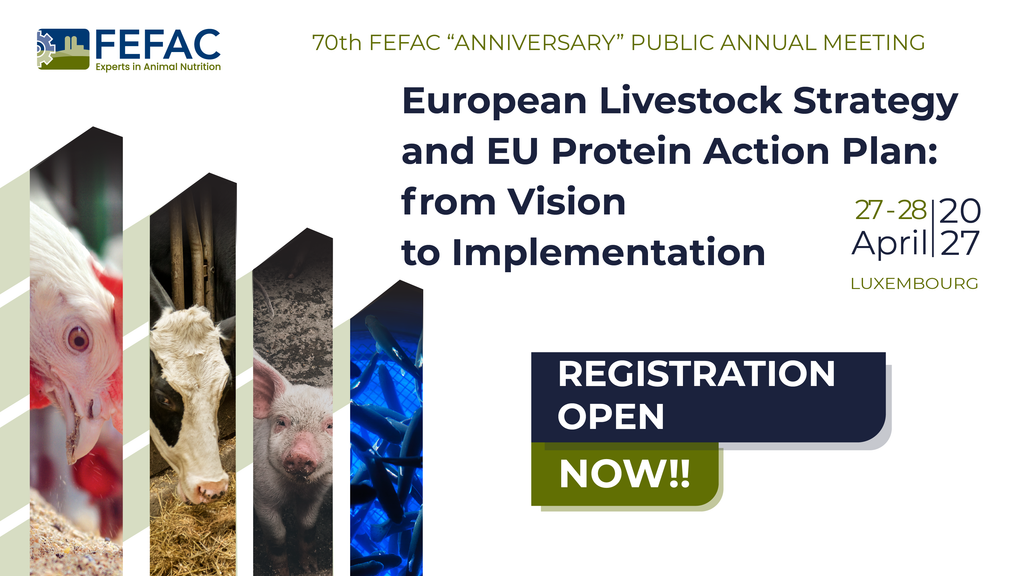
Read more >70th FEFAC Anniversary Public Annual Meeting 2027
Read more >


