OUTCOME OF THE 31ST FEFAC CONGRESS “EUROPEAN LIVESTOCK SECTOR – QUO VADIS?”
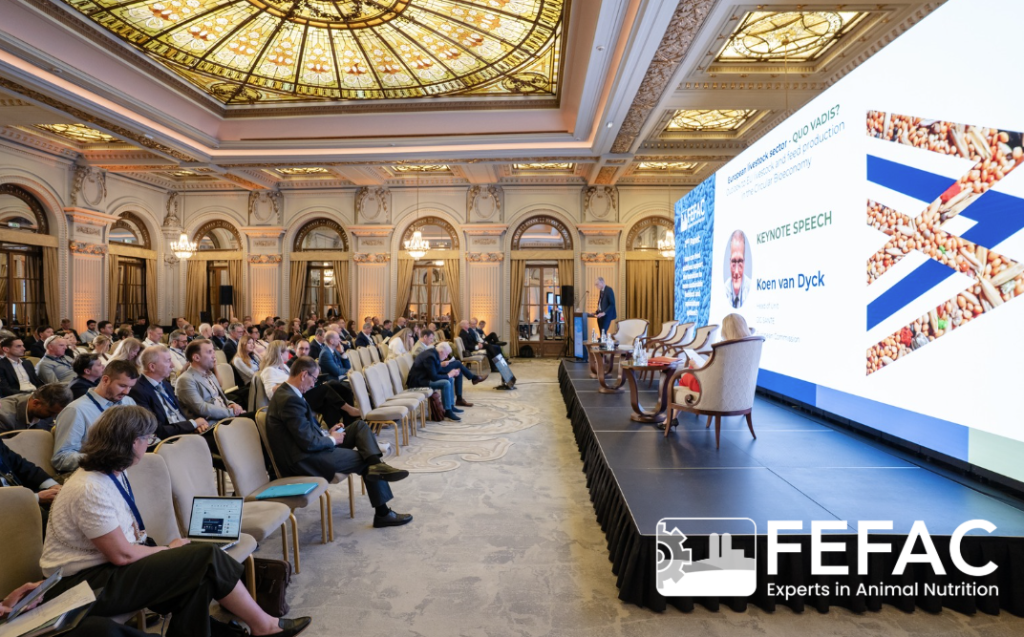
On 20 May 2026, FEFAC held its 31st FEFAC Congress in Bucharest, Romania. This event, co-hosted by ANFNC, the Romanian National Association of Compound Feed Manufacturers, was held “back-to-back” with the 13th ANFNC Annual Conference, and offered a combination of high-level debate, innovation showcases, and exclusive site visits from 19 to 21 May.
The first panel session was themed “EU Agricultural Markets and EU Trade Policy Outlook: EU & Ukraine Agricultural Trade Relationship in the Context of Changing EU FTA Agreements”, with the 1st keynote speech delivered by Pierre Bascou, Deputy Director General of DG AGRI, European Commission. He stressed that trade, though often depicted negatively in public debate, is of crucial strategic importance to the EU feed and livestock sector, considering the structural dependency on imports, particularly of feed additives and high-protein meals. In this context, keeping markets open is a food security imperative, while the EU should increase efforts to obtain a degree of strategic autonomy. He noted the possible contribution of Ukraine to help reduce the EU’s protein deficit.

Elli Tsiforou (COPA-COGECA) highlighted in her keynote the rising input costs, triggering shifting planting decision patterns, leading to reduced crop harvests. She stressed the commitment to open and fair trade, without which the EU agri-food chain would suffocate, but stressed the importance of fairness and reciprocity regarding production standards to ensure a level playing field for EU farmers. She stressed the need for the EU to go beyond the CAP to provide tools to the farming and agri-food chain to improve crisis preparedness and resilience. She noted that the EU Fertiliser Action Plan lacks concrete solutions. On livestock specifically, she pointed to policy, market, and animal disease impacts affecting the sector and called for a strategy that supports different production systems and reduces administrative burden to enable investment. Sergij Kharin (CORTEVA) called for a balanced discussion on the future role of Ukraine and its contribution to the EU agri-food chain as a strategic partner. Rosalind Leeck (USSEC) identified the common challenges between EU and US farmers, including regulatory pressure (e.g. EUDR, ILUC) and rising market uncertainty, which should be addressed in EU–US trade discussions. Alejandra Castillo (NAEGA) reported on increased EU demand for corn and co-products such as DDGS and corn gluten meal, which have to be balanced against lower US crop estimates due to drought and competition from Brazil and Argentina. Vasile Varvaroi (ARCPA) underlined Ukraine’s role as a major trade partner to the EU, with over 60% of its agricultural exports directed to the EU.

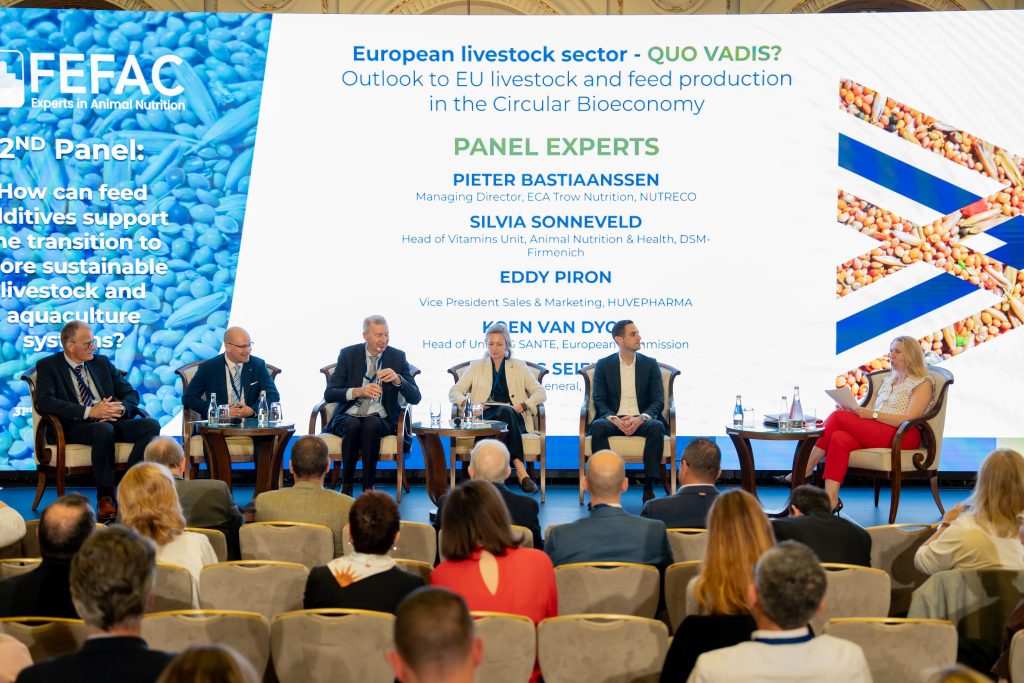
The 2nd session was dedicated to feed additives and how they can support the transition to more sustainable livestock and aquaculture systems. Koen van Dyck (European Commission) explained the key elements of the proposals in the food and feed safety omnibus in relation to feed additives that should facilitate some operational aspects in the sector (e.g. withdrawal of 10-year limitation for authorisations), while noting that at this stage the European Commission does not foresee a full recasting of the legislation. The other speakers of the session, including Piotr Bonislawski (Elanco), Joerg Seifert (FEFANA), Pieter Bastiaanssen (Trouw Nutrition), Silvia Sonneveld (DSM) and Eddy Piron (Huvepharma) stressed the importance of essential feed additives for competitive and sustainable livestock systems called for commitments to modernise the legislative framework for feed additives, to ensure the EU remains an attractive market for innovative feed additives and fully enable the sector’s contribution to address sustainability challenges (e.g. allowing for environmental claims).

The 3rd session explored the opportunities and practical challenges of the feed sector’s role in the EU bioeconomy. A setting the scene presentation was delivered by Zeev Noga (UECBV), providing a wide-ranging overview of the challenges in the red meat production sector, such as disease outbreaks and regulatory standards (e.g. animal transport legislation), while noting the circularity characteristics of EU pigmeat production. David Carpintero (ePURE) presented on the regulatory and market landscape shaping EU bioenergy production, with a particular focus on the Renewable Energy Directive (RED) as the key policy instrument governing EU biofuels. He stressed the interlinkages between renewable energy production and the feed sector, with substantial streams of protein-rich co-products (DDGS, wheat gluten, corn gluten meal) coming from ethanol production, which contribute directly to increased circularity of feed and livestock production systems.


Together with the other panellists, Oana Neagu (COPA-COGECA), Alexander Romme (EFFPA), Arturo Hernangomez (ANPROGAPOR) and Marc Sneyders (Bayer), they explored bioeconomy topics such as cascading in biomass use, the dynamics in Eastern and South-Eastern Europe to favor update of circular feed solutions and EU regulatory challenges that drive the decrease in emissions such as carbon, ammonia, nitrogen and methane in feed and livestock production systems.

Newly elected FEFAC President Nicolas Coudry-Mesny closed the Congress by highlighting the shared understanding that strengthened cooperation within the value chain, also at the international level, is absolutely vital in the current geopolitical setting, to minimise the risk of disruption of essential feed and food chains. This triggers the need for genuine “out of the box” thinking, where all actors must be willing to leave their comfort zones and move beyond long-held convictions in delivering and implementing effective solutions to the market.
