FEFAC publishes 6th Feed Sustainability Charter 2030 Progress Report
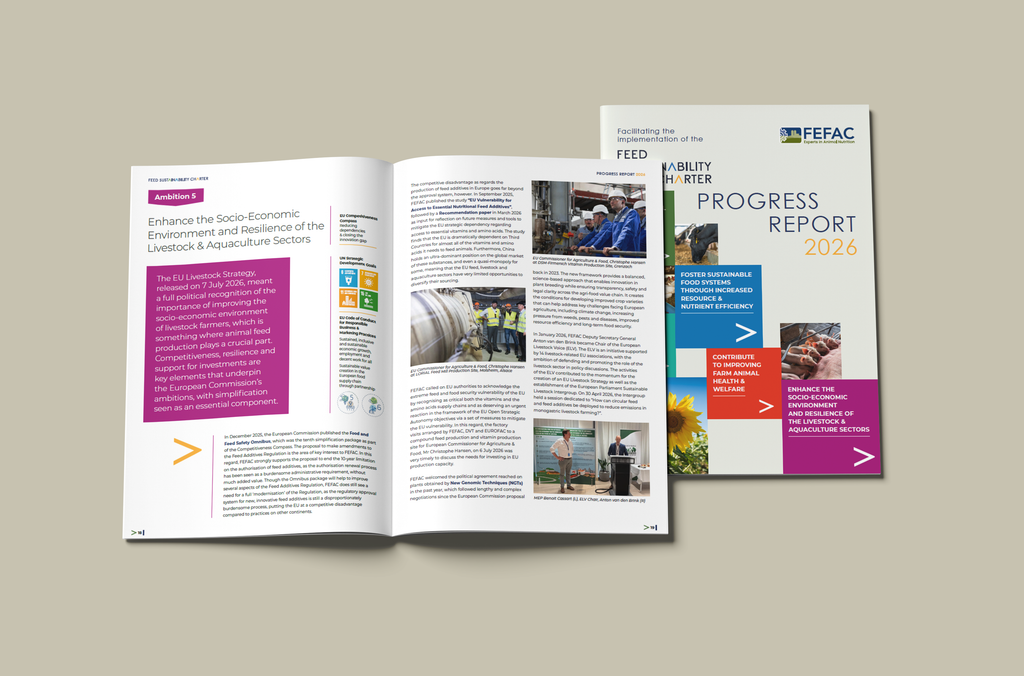
On 8 September, FEFAC published the 6th edition of its Feed Sustainability Charter 2030 Progress Report, which takes stock of the European feed industry’s progress against the Charter’s five ambitions: climate neutrality, responsible sourcing, animal health and welfare, resource efficiency, and socio-economic resilience.
This year’s edition comes as a new FEFAC Presidency takes office and the European Commission adopts its EU Protein Plan and EU Livestock Strategy. The report shows how FEFAC welcomes the package as a timely response to the strategic vulnerabilities facing Europe’s feed and food chains, including the Protein Plan’s target of raising the share of EU-grown oilseeds and protein crops in domestic feed to 35% by 2035, up from around a quarter today. For FEFAC, strategic dependency extends beyond protein crops to essential feed additives such as vitamins and amino acids, where Europe still relies heavily on a handful of non-EU suppliers.
As key achievements from the past year, the report looks back at the progress made by the GFLI Database, a symposium on circular feed, feed industry site visits for European Commissioner for Agriculture & Food Christophe Hansen and the election of Anton van den Brink (FEFAC Deputy Secretary General) as Chair of the European Livestock Voice.
FEFAC President Nicolas Coudry-Mesny: “As I welcome readers to this 6th Feed Sustainability Charter 2030 Progress Report as newly elected FEFAC President, I am encouraged to see the European agri-food and livestock sectors once again recognised as strategic assets for Europe’s competitiveness, resilience and food security. The EU Livestock Strategy and Protein Action Plan provide an important new policy direction, with a strong focus on practical actions to strengthen our food and feed chains and address strategic dependencies. At the same time, our sector continues to deliver solutions on the ground, from improving resource efficiency and circularity to strengthening access to essential feed ingredients. I warmly invite all stakeholders to read this year’s Progress Report as a testimony to the concrete actions being taken by our members to contribute to a more resilient, competitive and sustainable European livestock and aquaculture sector.”
Read the full 6th Progress Report to see how the feed sector is turning these ambitions into concrete action.